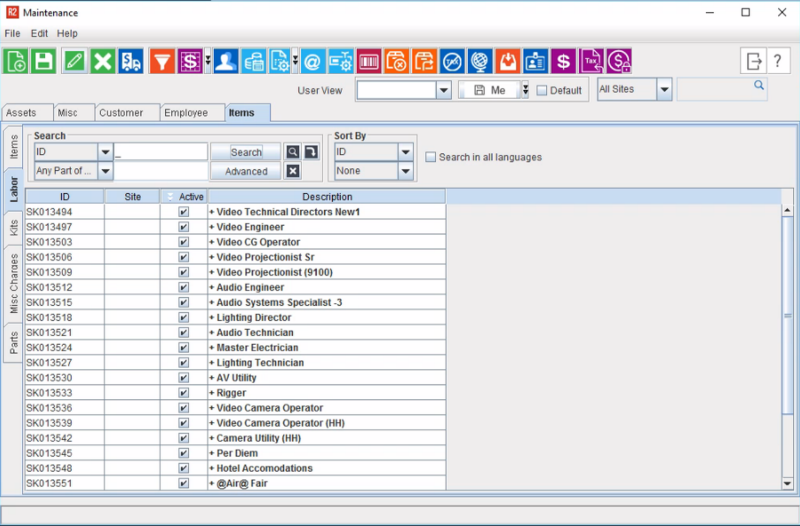
Go to Maintenance > Items > Labor
Content was last updated in 06.22.08-00
IR35 rules are designed to work out whether a contractor is someone who is genuinely self-employed rather than a “disguised” employee, for the purposes of paying tax. IR35, also known as the “intermediaries’ legislation” applies where an individual provides their services to a client via an intermediary such as a personal service company – this arrangement is known as “off-payroll working” – but the relationship with the client would otherwise suggest employment status.
From a legal perspective, IR35 is predominently a tax legislation that applies where an individual works through an ‘intermediary’, such as a personal services company, and provides their services to an end-user client.
You may be affected by these rules if you are:
A worker who provides their services through their intermediary.
A client who receives services from a worker through their intermediary.
An agency providing workers’ services through their intermediary.
Each contract that the Intermediary company undertakes is viewed separately, which means that one contract with client A could be considered disguised employment and a contract with client B considered to be non employment. Additionally, each contract is reviewed separately, including assessing both the written terms and also the working practices. Thus keep a record of the due diligence. Since the reality of the appointment holds more weight than the written terms so it is important to ensure the contract is a true reflection of the appointment.
When referring to IR35 status, the common terms used are “inside” and “outside” IR35. Outside IR35 status applies to those who are genuine contractors, whilst inside IR35 applies to those who are employees for tax purposes. These terms indicate the contractor’s status of being either inside or outside of the scope of IR35 legislation.
Under IR35 if the intermediary didn’t exist and the individual looks like an employee of the client, then their assignment is deemed to be ‘inside IR35’, meaning that the individual’s pay should be subject to Pay As You Earn (PAYE) tax and National Insurance (NI).
It is important to note that each working arrangement is reviewed on its own merits and all of the positive and negative elements of both the written contract and working practices will be weighed up in line with case law in order to provide a balanced opinion.
Tax compliance and regulations which a company has to adhere for an employed or a self employed hire are different.
For Employed hires, the company is expected to deduct the liable Income Tax and Insurance Contribution at source.
For Self-Employed hires, the Income Tax and Insurance Contribution is borne by the hires directly at their own end.
The core requirement of IR35 compliance is to have certain Compliance and Exception documents available in record for each Labor Position that is added to any project. You can configure these documents from within the Labor Position edit window.
Steps given below are generic in nature and can be followed for any existing resource or a newly created one.
Go to Maintenance > Items > Labor
To create new Labor click New Labor icon.
Else Click on the Labor Edit icon
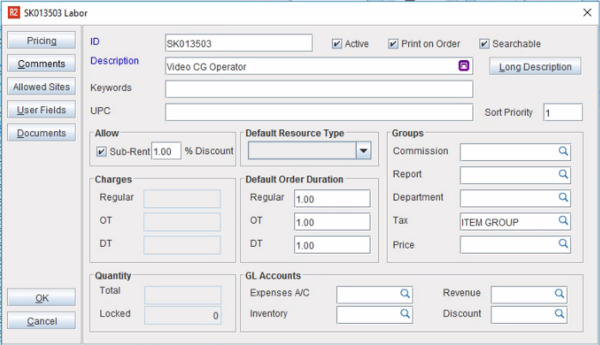
The Labor Information dialog box opens
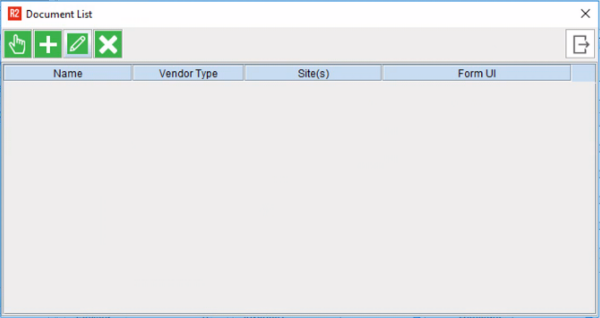
Click the Document button to open the 'Document List ' dialog box
All the documents which are configured for this Labor Position are displayed
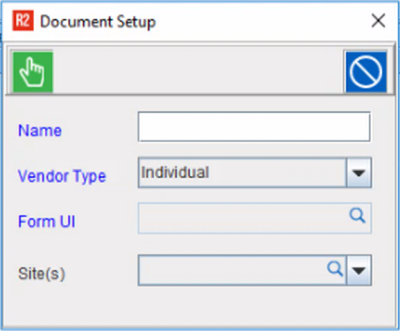
To Add new, click on the icon and Document Setup dialog box opens.
 |
Adding a Name, Selecting a Vendor Type, and Selecting a Form UI is Mandatory. |
Provide a name for this setting.
Use the dropdown to select Vendor Type
Use the Browse dialog box to pick the relevant Form UI.
Select the Site(s) for which setting is applicable.
If you want the settings to be applied for all sites, you should leave this field blank.
Click Ok.
The added setting is now reflected in the 'Document List ' dialog box.
 |
In the backend, system creates the documents using CID based Form UI setup.
Once the documents are ready, the system will auto picks the required document, whenever the concerned PO is sent for prining. |